Mardi Himal Trekking
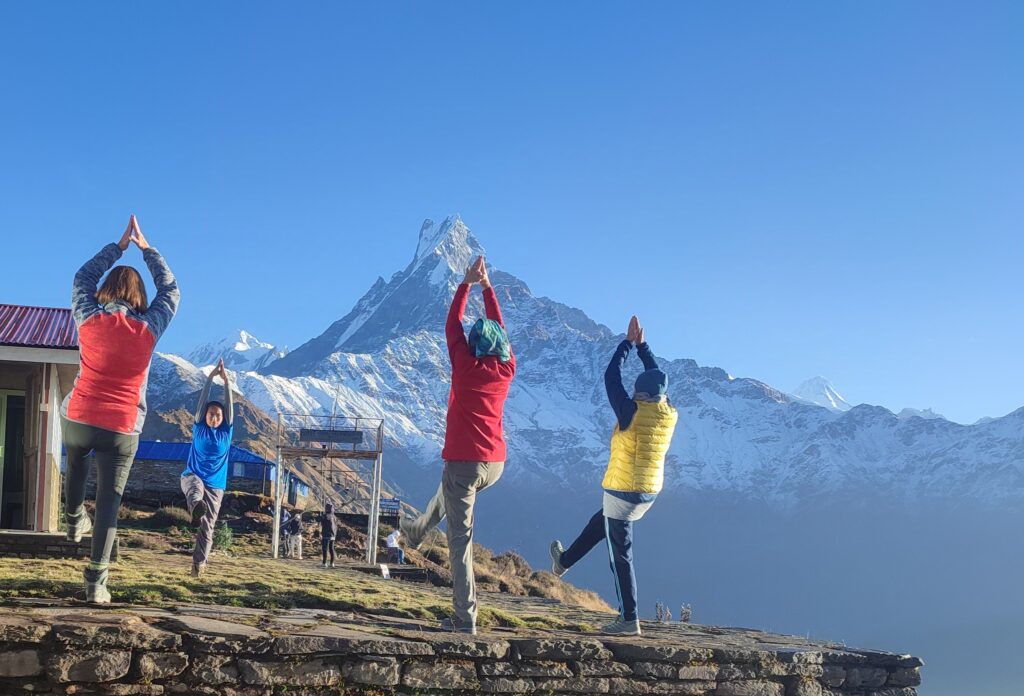
experience the magic of Nepal on a unique journey that blends beauty, inner contemplation, and deep connection with nature. This trekking experience leads you through the breathtaking landscapes of the Mardi Himal region, deep into the heart of the Himalayas. with yoga and meditation sessions, it offers a pleasant- sounding balance of movement, stillness, and significant presence in nature.
Our journey begins in the high-spirited city of Kathmandu, where Nepal’s spiritual and cultural heritage come alive. After an introduction to the country’s rich history and sacred sites, we continue journey to Pokhara—a restful lakeside town lays between Phewa Lake and the mighty Annapurna range. Here, we take time to relax, connect, and prepare for the days of trekking ahead.
As we follow the trail to Mardi Himal, you’ll find yourself immersed in a various landscape of rich valleys, and dense forests. Led by our experienced guide and yoga teacher, we combine our daily hikes with morning and evening yoga practices, authorizing body and mind to balancing in the rhythm of the mountains. Each stair invites a heavy relationship with nature and a heartfelt touch of inner peace.
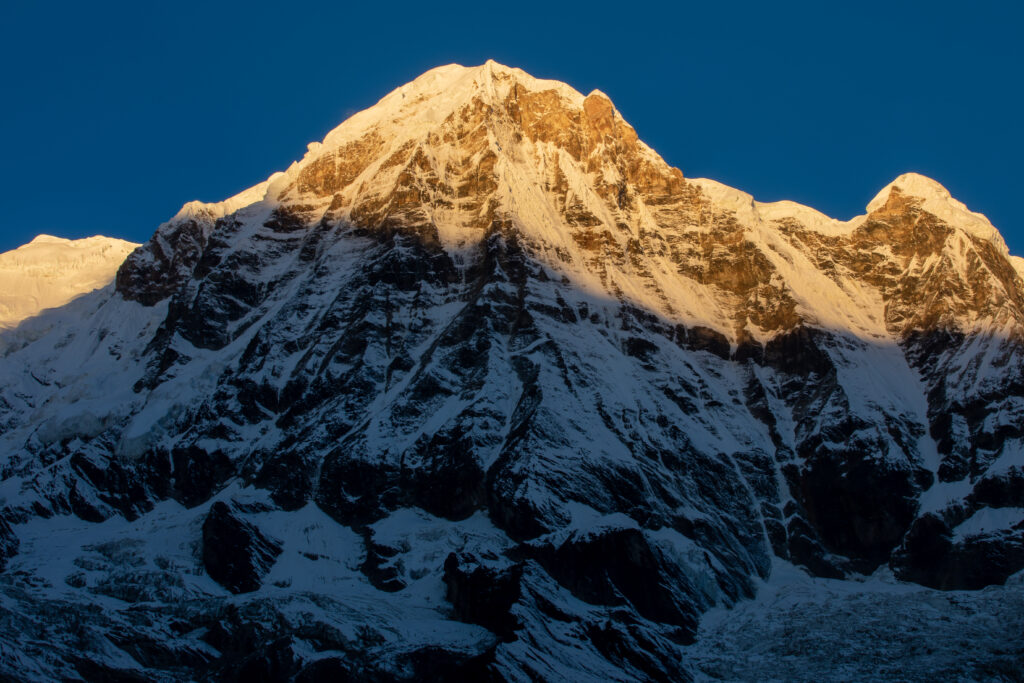
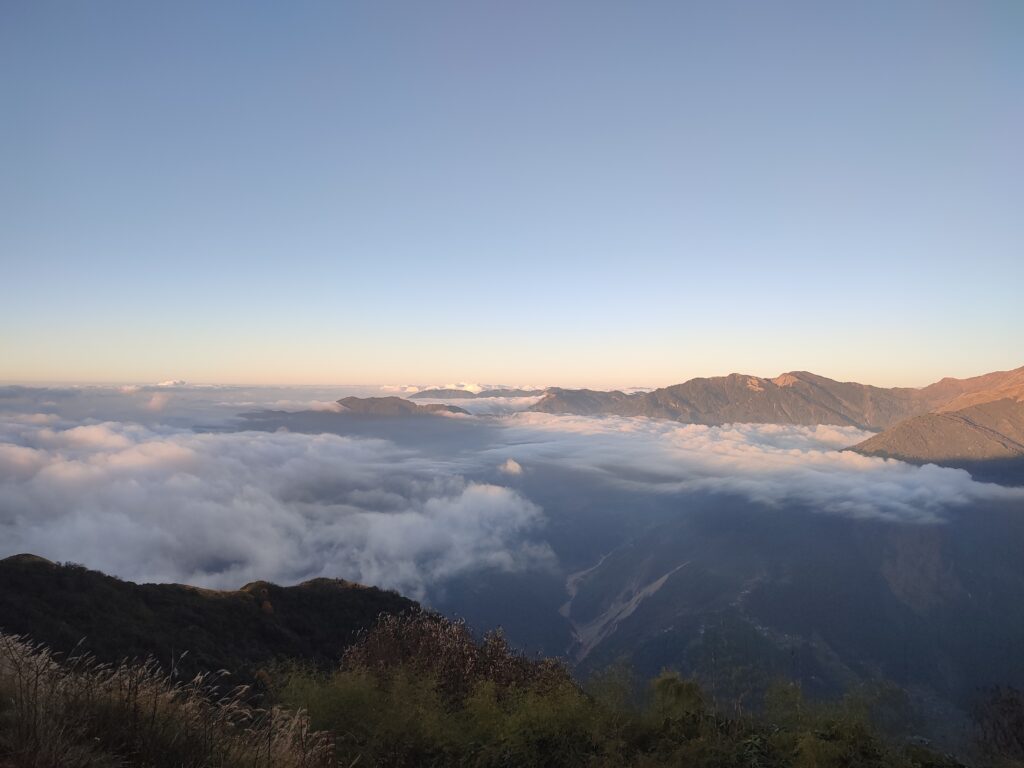
A seasonal highlight is the rhododendron forests in spring—the hills come alive with color as blossoms burst into bloom, At 4,300 meters, we reach the Mardi Himal viewpoint, where a remarkable panorama of the Annapurna massif disclose itself in all its glory.
Throughout the journey, we ask you to experience sip herbal tea made from local plants, and take in the peaceful silence of nature.
This journey is more than a trekking adventure—it is a pleasant invitation to reunify with yourself, to experience the wonder of the Himalayas, and to light on the deep calm that comes from moving slowly, breathing enormously, and soul truly present.
Highlights
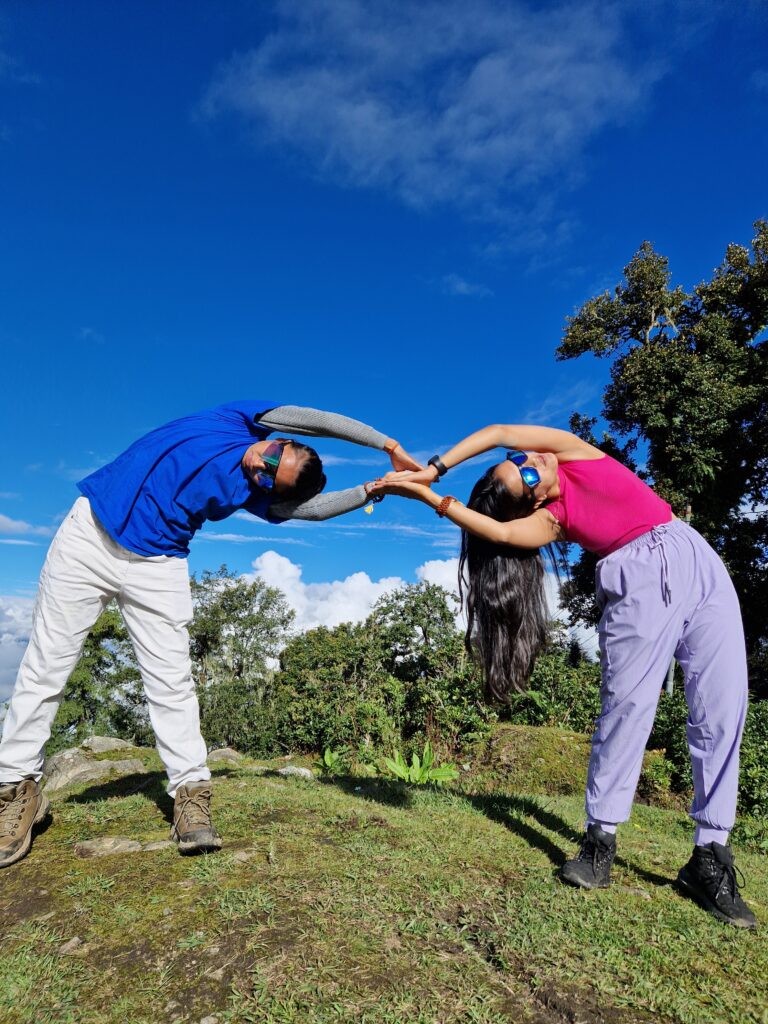
- Guided yoga & meditation sessions in the Himalayas
- Trekking through rhododendron forests, valleys & high-altitude ridges
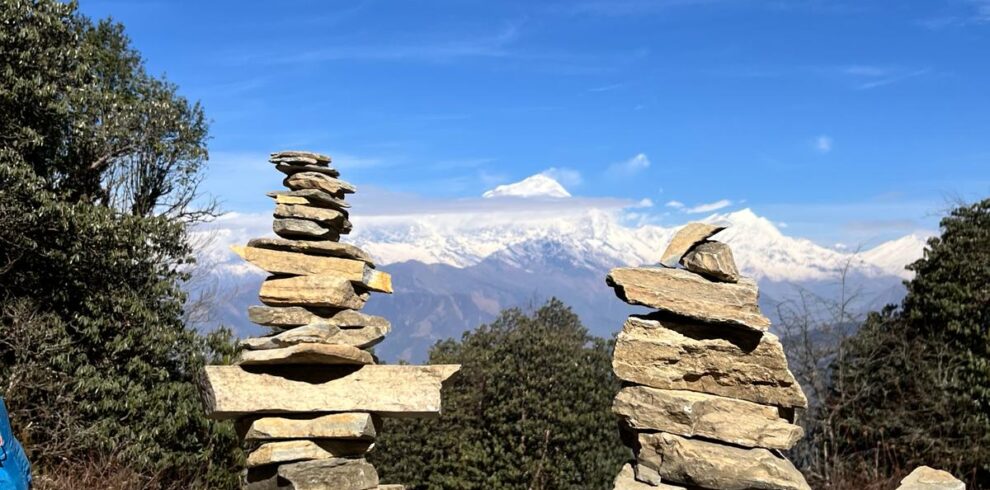
- Stunning views of the Annapurna massif from Mardi Himal Viewpoint (4,300 m)
- Cultural visits to sacred sites in Kathmandu & Pokhara
- Herbal tea ceremonies & breathing practices in nature
Equipment Guides
- Warm fleece hat with ears cover or balaclava.
- Sun hat and scarf to cover face.
- Good polarized sunglass (uv protector).
- Cold proof polypropylene tshirt (2/2 half and full sleeve).
- Wind proof fleece jacket and thermal down tshirt.
- waterproof shell jacket and Gore-tex jacket.
- Light weight poly-liner gloves and wool or fleece gloves(1 pair each).
- A pair of expedition mittens.(waterproof shell).
- Underwears.
- Light weight cotton pants and hiking shorts.(1 pair each)
- A pair of light and expedition thermal bottoms.
- A pair of fleece trousers and A pair of waterproof shell pants.(breathable fabric)
- A pair of socks.(Thin lightweight inner and thick warm wool hiking socks).
- Hiking shoes with spare laces.
- Light sandals/shoes for camp.
Itinearary
Arrival in Kathmandu. You will be warmly welcomed at the airport according to Nepalese tradition. Transfer to the hotel and check-in. In the evening, we will walk to the Swayambunath Stupa, from where we can overlook the Kathmandu Valley. Swayambunath is considered one of the oldest Buddhist temple complexes in the world. The interior structures are estimated to be approximately 2,500 years old. Due to the large number of monkeys that live there, Swayambunath is also called the "Temple of the Monkeys." We may have the opportunity to witness an evening puja (ceremony) performed by the monks. Overnight at the hotel in Kathmandu.
In the morning, we begin our day with a yoga and meditation session, offering an invigorating and grounding start. After breakfast, we visit Pashupatinath, one of the most sacred Hindu pilgrimage sites in Nepal. Dedicated to Lord Shiva, this ancient temple complex has drawn devotees from across South Asia since the 5th century. Every follower of Shiva aspires to make offerings here at least once in their lifetime. Much like Varanasi in India, it is considered a great honor to be cremated on the banks of the Bagmati River. The temple grounds are home to sadhus and tantric yogis, who often welcome meaningful conversations with curious visitors.
In the afternoon and evening, we explore Boudhanath Stupa, the spiritual heart of Tibetan Buddhist life in Kathmandu. Surrounded by a village of ornate monasteries, the stupa—rising 36 meters high—is among the largest of its kind in the world. Originally built in the 5th century AD, it was carefully restored after the 2015 earthquake. During our visit, we may be fortunate enough to witness young monks reciting scriptures, accompanied by the resonant tones of horns, drums, and ritual chants. If possible, we may even meet a Tibetan lama and have the chance to ask questions about Buddhism and daily monastic life.
As dusk falls, the atmosphere becomes meditative. Devotees begin their kora—circumambulating the stupa in a clockwise direction while chanting mantras or spinning prayer wheels. We are warmly invited to join them in this timeless ritual.
Overnight at a hotel in Kathmandu.
Today, we travel to Pokhara, a peaceful lakeside city nestled at the foot of the Himalayas. Upon arrival, we are greeted by the tranquil beauty of Lake Fewa, with its shimmering waters reflecting the snow-capped peaks of the Annapurna range. The setting is perfect for rest and quiet reflection after our journey.
In the evening, we can enjoy dinner at one of the cozy lakeside restaurants, soaking in the relaxed atmosphere and perhaps watching the sun set behind the mountains.
Overnight at a hotel in Pokhara. Enjoy views of the Himalayas and relax by the tranquil Lake Fewa.
We begin the day with a yoga session, gently awakening body and mind in preparation for our first day on the trail. After breakfast, we drive to Kande, the starting point of our Mardi Himal trek. As we ascend by vehicle, we are treated to breathtaking views of the Annapurna mountain range, the sacred Machhapuchhare (Fishtail Peak), and the expansive Pokhara Valley.
Upon arrival in Kande, our luggage is handed over to the porters, and we begin our hike along a scenic mountain ridge. The trail leads us through vibrant rhododendron forests, peaceful villages, and terraced fields that have been cultivated for generations.
We stop for lunch at Australia Camp, where we enjoy a well-deserved rest and panoramic vistas of the surrounding Himalayan giants—views that remain awe-inspiring throughout the day.
In the final stretch, we follow a portion of the classic Annapurna trekking route, eventually reaching Deurali, our resting place for the night.
Overnight at a mountain lodge in Deurali.
(Total walking time: approx. 4–5 hours)
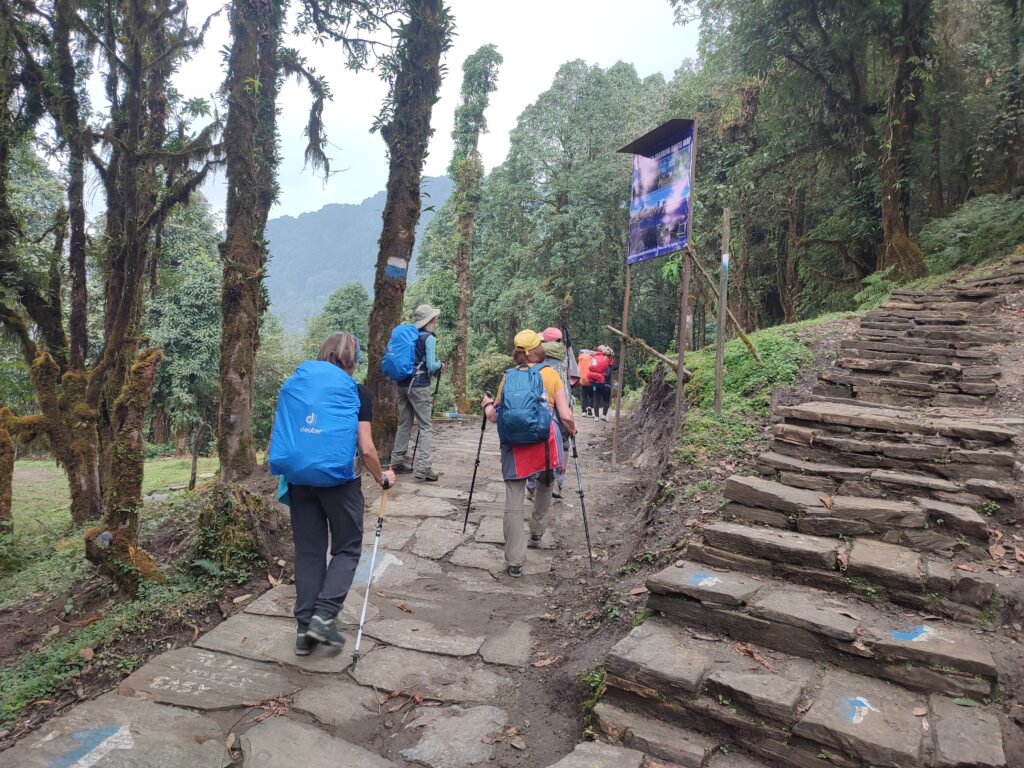
Weather permitting, we begin the day with a yoga session in nature, surrounded by the peaceful stillness of the mountains—an ideal way to align body and mind before the day’s hike. After yoga and a nourishing breakfast, we set off on a trail that winds through a magical forest, rich with towering gall oaks, maples, birches, and, depending on the season, vibrant rhododendrons in full bloom.
The serenity of the forest and the play of light through the trees create an almost mystical atmosphere. Throughout the hike, we’re rewarded with glimpses of majestic mountain views, appearing like silent guardians beyond the trees, inviting us to pause and take them in.
Total walking time: approximately 4–5 hours
Overnight at a mountain lodge in Forest Camp.
We begin our morning with a gentle yoga session, setting a mindful and energizing tone for the day ahead. After breakfast, we continue our trek through an enchanting forest filled with orchids, mosses, tree ferns, and lichens—a rich and ancient ecosystem that feels almost untouched.
As we gain elevation, the vegetation gradually changes, reflecting the transition to higher altitudes. Along the way, forest clearings reward us with sweeping views of the Annapurna massif and Machhapuchhare, often called the “Nepalese Matterhorn” for its dramatic, pyramidal shape.
We reach Low Camp by midday, now at an altitude of approximately 3,000 meters. At this point in the trek, acclimatization becomes essential, and we encourage you to use the afternoon for rest, gentle movement, and reflection amidst the stunning mountain scenery.
Later in the day, there’s an optional yoga and meditation session, offering further support for your acclimatization and an opportunity to deepen your connection with the serene environment.
Walking time: approximately 4–5 hours
Overnight at a mountain lodge in Low Camp.
We begin the day with a morning yoga and meditation session, allowing us to center ourselves before moving into higher altitudes. After a nourishing breakfast, our trek starts with a short but steep ascent, leading us to the upper edge of the forest.
From here, the landscape opens into a grassy alpine ridge, offering uninterrupted views as we ascend toward High Camp. The trail rewards us with spectacular vistas, including the towering Dhaulagiri (8,167 m)—one of the world’s highest peaks—and the ever-present silhouettes of Annapurna South and Machhapuchhare, which now feel almost within reach.
We arrive at our lodge around midday, giving us time to rest, acclimatize, and take in the dramatic mountain scenery. In the afternoon, there’s another opportunity to engage in yoga and meditation, especially beneficial at this altitude to support breath and circulation.
Today begins early, as we embark on one of the most challenging and unforgettable stages of the trek. The trail is more physically demanding than previous days, but the effort is richly rewarded with awe-inspiring scenery and a deep sense of accomplishment.
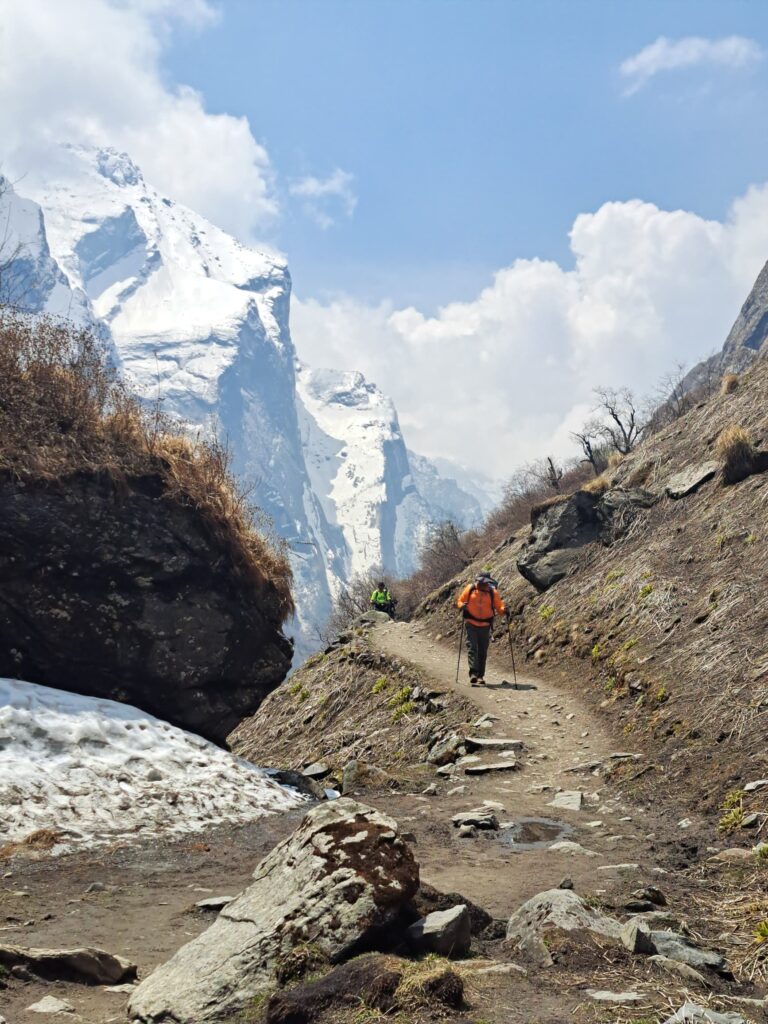
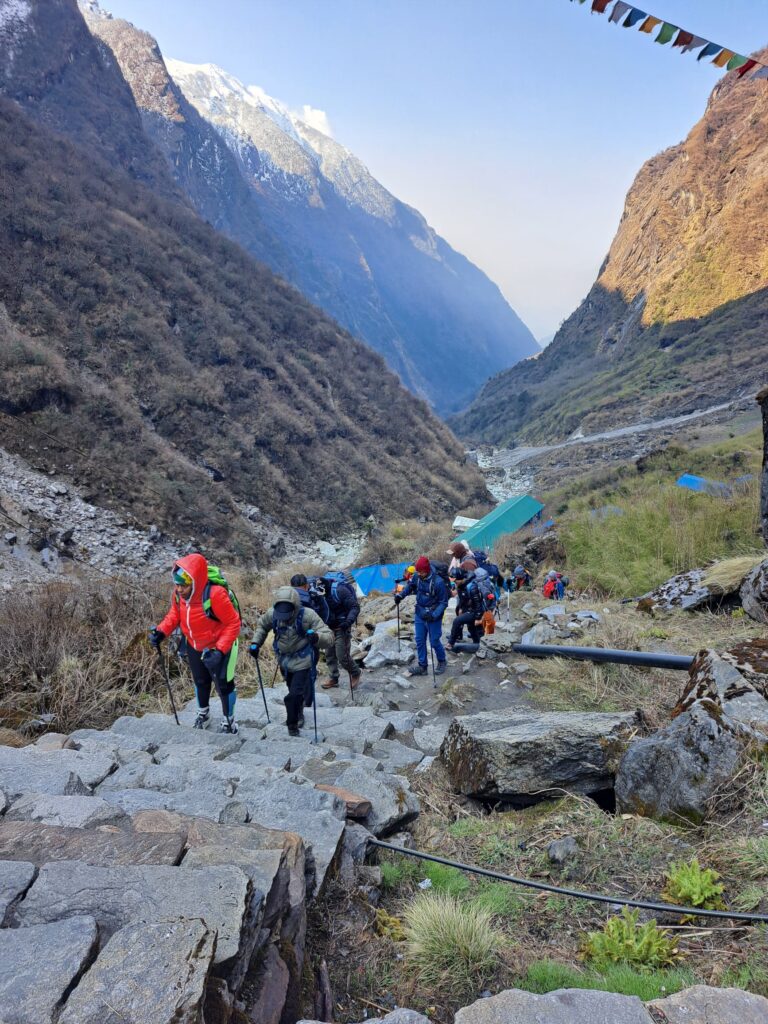
As we ascend, we pass several spectacular viewpoints, offering sweeping vistas over the surrounding valleys and distant trails—including parts of the Annapurna Base Camp route. The landscape becomes more rugged and alpine, with vast skies and towering peaks in every direction.
At around 4,300 meters, we reach a stunning vantage point where the panoramic view of the Himalayas is nothing short of breathtaking. From here, it’s approximately another hour of trekking to the Mardi Himal Base Camp—the high point of our journey.
Surrounded by a grand amphitheater of mountains, we take time to absorb the unobstructed views of Hiunchuli, Mardi Himal, Machhapuchhare, and the dramatic south face of Annapurna. This is a moment to simply be present, breathe deeply, and feel the stillness of the mountains.
After taking it all in, we descend back to High Camp, where we rest and spend the night.
Walking time: approximately 7–8 hours
Overnight at a mountain lodge in High Camp.
We begin the morning with yoga and meditation, gently awakening the body and preparing for the day’s descent. After breakfast, we retrace our steps down to Low Camp, following a familiar trail along the ridgeline with open views of the Himalayas.
From Low Camp, we descend further through a lush mountain forest, rich with biodiversity and alive with birdsong and the scent of pine. The path eventually leads us to Siding, a quiet and traditional Gurung village nestled in the hills.
Siding remains largely untouched by tourism, offering an authentic glimpse into rural Nepalese life and Gurung culture. Here, we have the chance to connect with the locals and learn about their daily life and customs. In the afternoon, there's also the opportunity to share a yoga session together, allowing the experience to settle deeply into body and mind.
Walking time: approximately 6–7 hours
Today, we continue our descent, hiking through the peaceful foothills of the Annapurna region. Our trail takes us through the charming Gurung villages of Ghalel (1,500 m) and Lwang (1,460 m)—both beautifully nestled in the rolling hills and surrounded by terraced fields.
These traditional villages offer a warm and welcoming atmosphere, with time to pause, connect, and enjoy the rhythms of rural life. It’s a gentle and reflective day, giving space to absorb the journey so far and savor the serenity of the landscape.
Walking time: approximately 5 hours
Overnight at a guesthouse in Lwang.
After breakfast, we begin our final day of trekking with a walk to the scenic village of Astam, followed by a gentle climb to Melbot (1,070 m). The trail winds through terraced hillsides and offers stunning vistas of the Annapurna range, allowing us to enjoy one last deep connection with the Himalayan landscape.
Upon arrival, we take time to relax and reflect, enjoying a peaceful afternoon yoga session with panoramic views of the surrounding mountains—a perfect way to close our mountain journey.
From Melbot, we drive back to Pokhara, where comfort and serenity await. The evening is yours to unwind at the hotel or enjoy the lakeside atmosphere once more.
Walking time: approximately 4 hours
Overnight at a hotel in Pokhara.
Today is yours to enjoy at leisure in the beautiful lakeside town of Pokhara. Take a peaceful stroll along the shores of Phewa Lake, explore the vibrant local markets, or hike up to the World Peace Stupa for stunning views of the lake and surrounding mountains. Immerse yourself once again in the relaxed atmosphere that makes Pokhara so special.
In the evening, unwind and savor your last night in this tranquil mountain town.
Overnight at a hotel in Pokhara.
After breakfast, we depart from Pokhara and journey back to Kathmandu. Along the way, soak in the stunning landscapes of Nepal’s countryside, reflecting on your unforgettable adventure. Upon arrival, check into your hotel and relax for the evening.
Overnight at a hotel in Kathmandu.
Free day in kathmandu
Going back to your country
- 4 nights with breakfast in a double room at the Hotel Vajra in Kathmandu;
- 3 nights with breakfast in a double room in a typical mid-range hotel in Pokhara;
- Overnight stays in a double room with full board without drinks in lodges during the trek;
- German-speaking tour guide and German-speaking yoga teacher throughout the trip;
- Transfers (airport transfers; Kathmandu – Pokhara – Kathmandu and Pokhara – trek start/end – Pokhara by private car);
- Necessary entrance fees;
- Sightseeing according to the program in Kathmandu;
- Trekking permits;
- Support from our local agency in Nepal.
- nternational flight;
- Lunch and dinner (except during the stay in Phulbari and on the trek) as well as drinks and alcohol;
- Single room surcharge $455
- Visa costs for Nepal approx. US$ 50 (valid for 30 days from the date of issue);
- items of a personal nature;
- Insurance;
- Flight Pokhara – Kathmandu: Can be booked locally for approximately $160
Trip Guide
The best times to visit the Annapurna region are during the spring (March to May) and autumn (September to November). These seasons offer clear skies, moderate temperatures, and stunning views of the mountains
Yes, you will need the Annapurna Conservation Area Permit (ACAP) and the TIMS (Trekkers’ Information Management System) card. These can be obtained in Kathmandu or Pokhara before starting your trek.
While you don’t need to be an athlete, a moderate level of fitness is essential. The trek involves walking 5–7 hours a day over uneven terrain and steep ascents. Preparing with regular hikes and cardiovascular exercises is recommended
The Annapurna region offers teahouse accommodations, which are basic lodges providing meals, a bed, and minimal facilities. Hot showers and Wi-Fi may be available at an additional cost in some locations.
Yes, altitude sickness can be a concern as you ascend above 2,500 meters. Acclimatization, staying hydrated, and ascending slowly are essential. Always inform your guide if you experience symptoms like headaches, dizziness, or nausea.
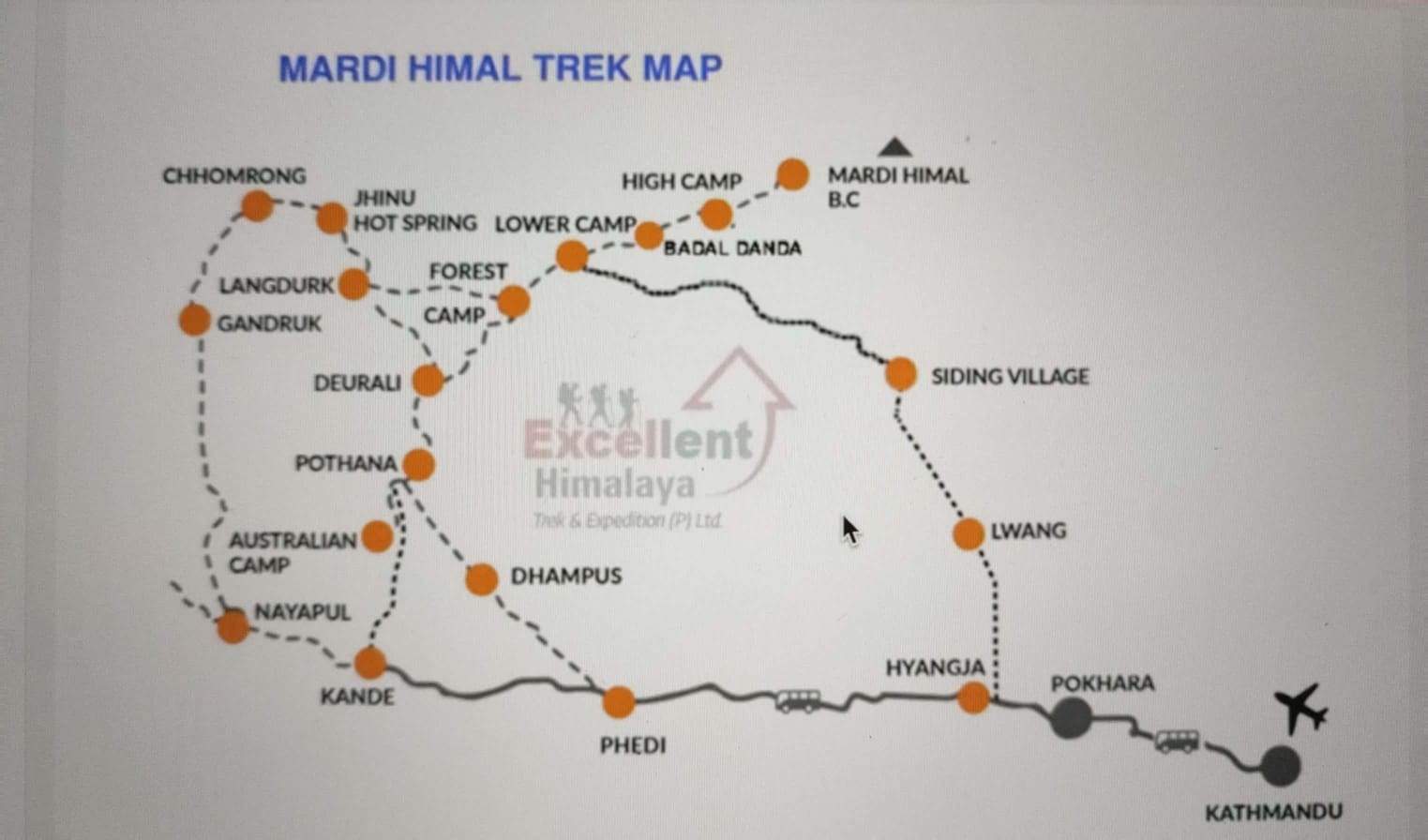
Map